
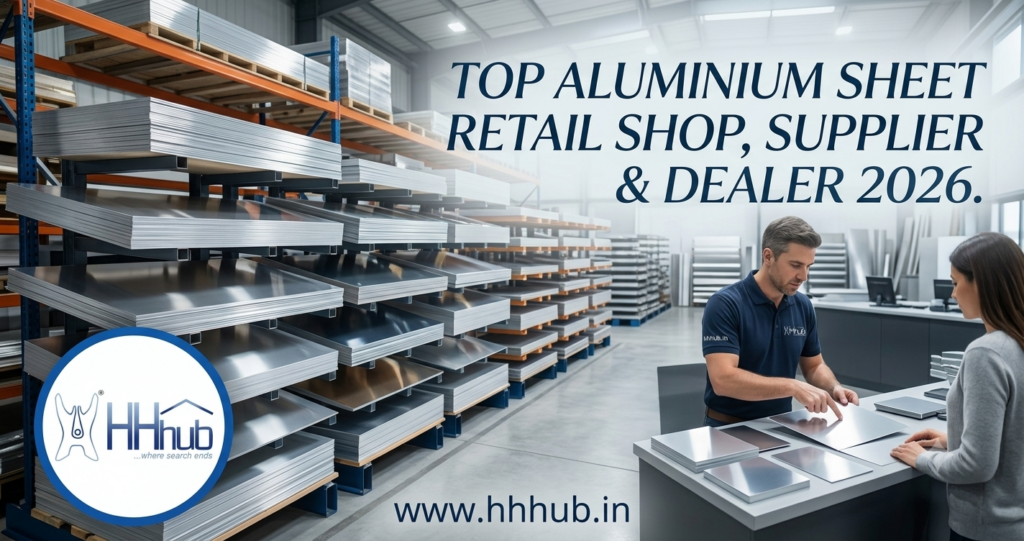
Aluminium sheets have quietly become one of the most in-demand building and fabrication materials of 2026. From roofing and cladding to electrical panels, signage, kitchen fabrication, and automotive bodywork, the metal’s blend of light weight, corrosion resistance, and long service life keeps demand climbing every year. But finding the right aluminium sheet retail shop, supplier and dealer is not always simple. Grades, gauges, finishes, and sourcing quality vary enormously between vendors, and a wrong choice can mean wasted budget, delayed projects, or material that fails long before it should.
This guide walks through everything a buyer whether a contractor, fabricator, architect, or homeowner needs to know before purchasing aluminium sheets in 2026. It also introduces HHhub, a retail shop, supplier, and dealer that has built its reputation on transparent sourcing, consistent stock, and grade-accurate supply for every kind of project.
Six and a half decades in metal, told in three numbers 65+ years of hands-on experience in the aluminium trade long enough to have watched entire alloy standards evolve · 1000+ customers who keep coming back for repeat orders, from single-sheet retail buyers to recurring bulk contracts · 25+ sectors served, spanning construction, marine, automotive, electrical, interiors, and beyond.
Numbers like these aren’t a marketing line, they’re the reason HHhub can tell a first-time buyer exactly which alloy suits their project instead of just selling whatever is closest to the counter.
Why Aluminium Sheets Are in Higher Demand Than Ever
Construction and manufacturing industries have shifted decisively toward lightweight, recyclable materials, and aluminium sits right at the centre of that shift. A few reasons this demand keeps rising:
- Weight-to-strength advantage – Aluminium weighs roughly a third of steel for a comparable structural role, cutting transport and installation costs.
- Corrosion resistance – A naturally forming oxide layer protects aluminium sheets from rust, moisture damage, and chemical wear, which is why it dominates roofing, façades, and coastal construction.
- Recyclability – Aluminium can be recycled repeatedly without losing its core properties, which appeals to builders and manufacturers working toward greener certifications.
- Design flexibility – Sheets can be cut, bent, anodised, powder-coated, embossed, or perforated, making them equally useful for structural panels and decorative finishes.
- Electrical and thermal performance – Its conductivity makes aluminium sheet metal a preferred choice for heat exchangers, bus bars, and electrical enclosures.
Because of this broad utility, the number of businesses claiming to be an “aluminium sheet supplier” has grown rapidly which makes it more important than ever to know what separates a dependable dealer from an average one.
What to Look for in an Aluminium Sheet Retail Shop
Before comparing vendors, it helps to understand the checklist that experienced buyers use. A trustworthy aluminium sheet retail shop should offer:
- Verified alloy and grade certification – so the sheet you receive matches what was promised on paper.
- Consistent stock availability across common thicknesses, widths, and finishes.
- Custom cutting and sizing services, reducing material wastage on-site.
- Transparent sourcing from recognised mills rather than unverifiable scrap-grade stock.
- Knowledgeable staff who can guide alloy selection based on the application – structural, decorative, marine, or electrical.
- After-sales support, including replacement policies for defective batches.
- Timely delivery and logistics, especially for bulk or time-sensitive projects.
Vendors who tick every one of these boxes are rare, which is exactly the gap HHhub was built to close.
HHhub: A Trusted Aluminium Sheet Retail Shop, Supplier & Dealer
HHhub operates as a complete one-stop destination for aluminium sheet buyers – covering retail, bulk supply, and dealership requirements under a single, accountable roof. Rather than functioning as just another listing on a directory, HHhub focuses on three pillars that buyers consistently say matter most: material authenticity, size accuracy, and dependable service.
HHhub as an Aluminium Sheet Retail Shop
For individual buyers, small fabricators, and walk-in customers, HHhub’s retail arm keeps a wide inventory of ready-to-cut aluminium sheets across standard sizes and finishes. Instead of waiting on mill lead times, retail customers can pick up or order sheets already stocked for immediate use, ideal for repair jobs, small renovation work, signage, or one-off fabrication projects.
HHhub as an Aluminium Sheet Retail Supplier
For businesses that need recurring or bulk supply fabrication workshops, construction contractors, HVAC companies, or interior design firms, HHhub functions as a dependable supply partner. This includes:
- Scheduled bulk deliveries tied to project timelines
- Custom cut-to-size sheet processing to reduce on-site wastage
- Grade-specific sourcing (1000, 3000, 5000, 6000, and 7000 series alloys)
- Support documentation for quality verification on large orders
HHhub as an Aluminium Sheet Retail Dealer
As a dealer, HHhub bridges the gap between manufacturers/mills and end customers, meaning buyers get manufacturer-grade material without needing to negotiate directly with large mills that typically only handle massive volume orders. This dealership model gives smaller buyers access to the same material quality that large industrial clients receive.
Aluminium Sheet Grades and Their Applications
Choosing the correct alloy grade is the single most important decision in any aluminium sheet purchase. The table below summarises the most commonly used grades and where they perform best.
| Alloy Series | Common Grades | Key Properties | Typical Applications |
| 1000 Series | 1050, 1100 | Very high purity, excellent corrosion resistance, low strength | Chemical processing, reflectors, decorative trims |
| 3000 Series | 3003, 3105 | Moderate strength, good formability, corrosion resistant | Roofing, cladding, kitchen utensils, storage tanks |
| 5000 Series | 5052, 5083, 5086 | High corrosion resistance, good weldability | Marine structures, fuel tanks, transport bodies |
| 6000 Series | 6061, 6063 | Balanced strength and machinability, heat-treatable | Structural framing, window/door frames, façades |
| 7000 Series | 7075 | Highest strength among common alloys | Aerospace components, high-stress industrial parts |
HHhub stocks and sources across all five series, with staff available to help buyers match the right alloy to their load, environment, and finishing requirements.
Aluminium Sheet Thickness (Gauge) Guide
Thickness selection affects everything from cost-efficiency to structural performance. Here’s a general reference guide for common thickness ranges and where each is typically used.
| Thickness Range | Common Use Case | Notes |
| 0.2 mm – 0.5 mm | Signage, nameplates, decorative panels | Lightweight, easy to cut and bend |
| 0.6 mm – 1.0 mm | Roofing sheets, false ceiling panels | Balance of weight and rigidity |
| 1.2 mm – 2.0 mm | Cladding, electrical enclosures, kitchen fabrication | Moderate structural strength |
| 2.5 mm – 5 mm | Structural panels, machine housings | Higher load-bearing capacity |
| 6 mm and above | Industrial plate applications (technically classified as plate, not sheet) | Used for heavy-duty structural or marine needs |
Note: Exact thickness availability depends on alloy grade and finish. HHhub’s team can confirm current stock thickness and custom-cut options for any specific project requirement.
HHhub vs. Traditional Local Aluminium Dealers
Many buyers still rely on unorganised local metal markets for their aluminium needs. While this can work for very small purchases, it often creates hidden risks around consistency and accountability. Here’s how HHhub compares with the typical local dealer experience.
| Feature | HHhub | Typical Local Dealer |
| Grade Verification | Documented and traceable | Often undocumented |
| Stock Consistency | Wide, regularly replenished inventory | Limited, inconsistent stock |
| Custom Cutting Service | Available in-house | Rarely available |
| Bulk Supply Capability | Structured, scheduled delivery | Ad-hoc, negotiation-based |
| After-Sales Support | Defect and replacement support | Minimal to none |
| Staff Product Knowledge | Trained on alloy/application matching | Varies widely |
| Order Transparency | Clear specifications on every order | Often verbal-only agreements |
This comparison is not about dismissing local markets entirely for very small, one-off needs, they still serve a purpose. But for anyone who needs predictable quality across repeated purchases, a structured dealer like HHhub reduces risk significantly.
Factors That Influence Aluminium Sheet Pricing in 2026
Aluminium pricing is influenced by global commodity movements, import duties, alloy composition, and regional demand all of which shift frequently. Rather than quoting a fixed rate that can go stale within weeks, it’s more useful to understand what actually drives the final price you’ll pay.
| Factor | How It Affects Price |
| London Metal Exchange (LME) aluminium rates | Global benchmark that influences base raw material cost |
| Alloy grade and purity | Higher-purity or specialty alloys (e.g., 5000/7000 series) typically cost more than standard 1000/3000 series |
| Sheet thickness and size | Thicker, larger sheets require more raw material per unit |
| Finish type | Anodised, painted, or embossed finishes add processing cost over mill-finish sheets |
| Order volume | Bulk orders generally receive better per-unit pricing than small retail purchases |
| Transportation and regional logistics | Delivery distance and fuel costs affect landed price |
| Import duties and taxes | Government policy changes can shift pricing with little notice |
Because these variables move independently and frequently, the most reliable way to get an accurate, current price is to request a live quote directly from HHhub’s sales team, who track daily rate movements and can confirm exact costs for your required grade, thickness, and quantity.
How to Choose the Right Aluminium Sheet for Your Project
A structured decision process saves both money and rework. Consider these steps before finalising a purchase:
1. Define the Application First
Structural framing, decorative cladding, electrical use, and marine exposure all demand different alloys. Starting with the application narrows the alloy choice immediately.
2. Match Thickness to Load and Environment
Thicker isn’t always better over-specifying thickness adds unnecessary weight and cost. Under-specifying risks premature failure. HHhub’s technical staff can help calculate the right balance.
3. Decide on Finish Requirements
Mill finish works for hidden structural use; anodised or powder-coated finishes suit visible architectural or decorative applications where appearance and added corrosion protection matter.
4. Confirm Certification and Traceability
Always ask for documentation confirming the alloy grade and source mill, particularly for structural or safety-critical applications.
5. Plan for Wastage and Custom Cutting
Ordering pre-cut sizes through a supplier offering custom cutting, like HHhub, reduces on-site wastage and labour time compared to cutting full sheets manually.
6. Verify Delivery Timelines
For contractors working against project deadlines, confirm dispatch and delivery schedules upfront rather than assuming standard lead times apply.
Industry Trends Shaping the Aluminium Sheet Market in 2026
The aluminium sheet industry isn’t static – several shifts are actively shaping how buyers and suppliers operate this year:
- Rising demand for recycled-content aluminium, driven by sustainability commitments across construction and manufacturing sectors.
- Growth in prefabricated and modular construction, which increasingly relies on pre-cut, ready-to-install aluminium panels rather than raw sheet stock.
- Wider adoption of anodised and PVDF-coated finishes in architectural façades, replacing older painted alternatives for better weather durability.
- Digitised procurement, with more buyers requesting instant quotes and order tracking rather than relying solely on phone-based negotiation.
- Tighter quality scrutiny, as more projects require documented material traceability for compliance and warranty purposes.
Suppliers who adapt to these shifts – offering documented sourcing, digital quoting, and sustainable stock options are increasingly preferred over vendors still operating on outdated, informal processes. HHhub has aligned its retail, supply, and dealership operations around exactly these expectations.
Common Mistakes Buyers Make When Sourcing Aluminium Sheets
Even experienced buyers occasionally run into avoidable problems. Being aware of these common mistakes can save both time and money:
- Choosing price over documentation. The lowest quoted rate sometimes comes from unverified stock that hasn’t been properly graded. A slightly higher price backed by certification is usually the safer long-term choice.
- Ignoring finish compatibility. Not every finish suits every environment for example, a standard painted finish may not hold up in high-humidity coastal regions the way an anodised finish would.
- Underestimating wastage during manual cutting. Buying full sheets and cutting on-site without proper equipment often leads to more material loss than ordering pre-cut sizes from a supplier offering custom cutting.
- Overlooking delivery timelines. Assuming a supplier can meet a tight project deadline without confirming it in advance is a common cause of project delays.
- Skipping a sample check on first orders. For first-time bulk orders, requesting a small sample batch before committing to full volume helps confirm quality expectations are met.
HHhub’s sales and technical teams routinely walk first-time buyers through these checkpoints, which is one reason repeat business makes up a large share of its retail and supply orders.
Why Buyer Trust Matters More Than Ever in the Aluminium Market
The aluminium sheet market has grown crowded, with countless listings across online directories and local markets claiming to offer the “best” rates. This crowding makes it harder for buyers to separate genuinely reliable suppliers from those simply listing products without the infrastructure to back them up. A few signals tend to separate the two:
- Physical stock verification – a supplier who can show real, current inventory rather than only catalogue images.
- Consistent communication – clear answers about grade, thickness availability, and delivery timelines rather than vague assurances.
- Willingness to document everything – from grade certification to delivery notes, so buyers have a paper trail if any dispute arises later.
- Long-term relationship focus – dealers who prioritise repeat business tend to be more careful about quality than those chasing one-time sales.
HHhub has built its retail, supply, and dealership operations around these exact trust signals, treating every order whether a single retail sheet or a large recurring supply contract with the same standard of documentation and accountability.
Sustainability and Aluminium: What Buyers Should Know
Aluminium’s recyclability is one of its strongest long-term advantages, and it’s increasingly influencing purchase decisions in 2026. Recycling aluminium requires only a fraction of the energy needed to produce primary aluminium from raw ore, which makes recycled-content sheets an attractive option for projects working toward sustainability targets or green building certifications. When evaluating suppliers, it’s worth asking whether recycled-content stock is available and how it compares in performance to primary aluminium for your specific application in most non-aerospace uses, the performance difference is negligible, while the environmental benefit is significant. HHhub maintains visibility into both primary and recycled-content stock, allowing buyers to choose based on project requirements and sustainability goals.
The People Behind the Sheets: Who You’re Actually Dealing With
A supplier is only as reliable as the people answering the phone when something needs sorting out. Here’s who sits behind HHhub’s retail counter, supply desk, and dispatch bay because knowing who’s accountable at each stage is part of evaluating any vendor before you commit an order.
Anuraag Mittal – Founder & CEO Sets the sourcing standards HHhub runs on. If a grade claim doesn’t hold up, the buck stops with him which is why grade verification isn’t treated as optional anywhere downstream.
Tarique Answer – Accounts Head Handles the paper trail invoices, documentation, and payment terms so that every order, retail or bulk, leaves a clean record buyers can refer back to later.
Rohit – Sales Head The first real conversation most buyers have with HHhub. Rohit’s job is matching the right alloy and thickness to the actual application, not just closing the order fastest.
Shankar – Dispatch Head Owns the part buyers feel most directly: whether the right sheets, cut to the right size, arrive on the day they were promised.
Four people, four checkpoints grading, paperwork, guidance, and delivery – each with a name attached rather than a generic support team.
FAQ
1.What is the difference between an aluminium sheet retail shop, supplier, and dealer?
A retail shop typically sells smaller quantities directly to walk-in or individual buyers. A supplier focuses on consistent, often bulk, delivery for businesses and contractors. A dealer works as an authorised intermediary connecting manufacturers or mills with end buyers. HHhub operates across all three roles, giving customers flexibility whether they need a single sheet or a scheduled bulk supply.
2.Which aluminium sheet grade is best for roofing?
3000 series alloys, particularly 3003, are widely used for roofing due to their balance of corrosion resistance, formability, and cost-efficiency.
3.How do I know if an aluminium sheet is genuine and correctly graded?
Ask for mill test certificates or documented grade verification. Reputable dealers like HHhub provide traceable sourcing information rather than relying on verbal assurances.
4.Can aluminium sheets be custom cut to size?
Yes. Most established suppliers, including HHhub, offer custom cutting services to match project dimensions exactly, reducing wastage compared to purchasing standard full-size sheets.
5.Is it better to buy aluminium sheets in bulk or as needed?
Bulk buying generally offers better per-unit value and is suited to ongoing projects, while retail purchases work better for smaller, one-time needs. HHhub supports both purchase models.
6.What factors should I check before finalising a supplier?
Grade certification, stock consistency, custom cutting capability, delivery reliability, and after-sales support are the core factors experienced buyers evaluate before committing to a supplier.
Summary
Aluminium sheets remain one of the most versatile and in-demand materials across construction, fabrication, and manufacturing in 2026. Selecting the right retail shop, supplier, or dealer comes down to a few non-negotiables: verified alloy grading, consistent stock, custom cutting capability, transparent sourcing, and reliable after-sales support. Pricing depends on multiple shifting factors including global metal rates, alloy type, thickness, finish, and order volume which makes a live quote from a knowledgeable supplier far more useful than any fixed number.
HHhub brings retail accessibility, structured bulk supply, and dealership-level sourcing together under one roof, giving buyers of every size from individual fabricators to large contractors a dependable, transparent way to source aluminium sheets without the guesswork that comes with unorganised local markets.
Conclusion
Whether the requirement is a single sheet for a repair job or a scheduled bulk supply for an ongoing construction project, the right aluminium sheet partner should offer more than just stock; it should offer certainty around grade, size, delivery, and support. HHhub has positioned itself as that dependable partner across all three roles: retail shop, supplier, and dealer, backed by knowledgeable staff and a genuine focus on getting buyers the right material the first time. For anyone evaluating aluminium sheet options in 2026, reaching out to HHhub directly for current stock availability and a live quote is the most practical next step.
This guide was researched and put together by the HHhub Content Team – written from inside the trade rather than about it, drawing on conversations with HHhub’s own sourcing, sales, and dispatch staff to keep the guidance grounded in how aluminium sheets actually get bought, cut, and delivered.